
BLOOD FATS, GI AND GL

Low glycemic index foods and beverages help improve blood fats independent of their fibre content, but consuming higher fibre varieties may have additional benefits. In this month’s shopper’s guide, we look at a range of low GI and low GL foods that are also sources of fibre that will help maintain optimal blood cholesterol and triglyceride levels as part of a healthy balanced diet.
For people with diabetes
To those of you who count your carbohydrate intake in grams, exchanges or portions, we have included the details for each of these.
15g carbohydrate exchange – a serve containing 12-18g carbohydrate.
10g carbohydrate portion – a serve containing 7.6-12.5g carbohydrate.
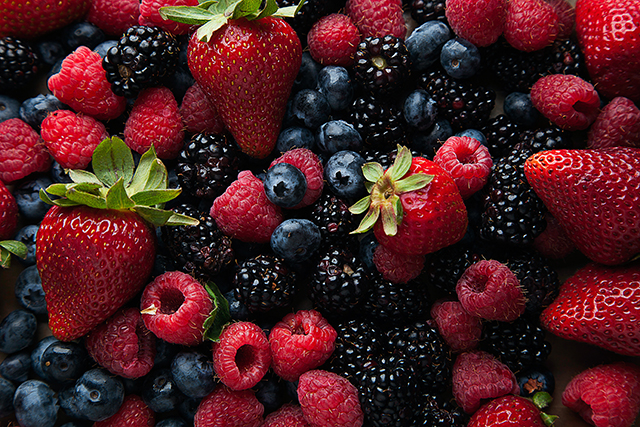
Strawberries
GI 40
Serving: 1 punnet (250 g or 9 Ounces)
| Energy | Available carbohydrate (g) | Fibre (g) | Exchanges | Portions | Glycemic load (g) |
| 130 kJ or 30 Cal | 10 | 6 | 0.5 | 1 | 4 |
Green peas (frozen, heated in microwave)
GI 42
Serving: 80 g (1/2 cup)
| Energy | Available carbohydrate (g) | Fibre (g) | Exchanges | Portions | Glycemic load (g) |
| 290 kJ or 70 Cal | 8.5 | 4 | 0.5 | 1 | 4 |
Reduced fat (1.5%) soy milk
GI 31
Serving: 1 Cup (250 mL or 8.5 Fl. ounces)
| Energy | Available carbohydrate (g) | Fibre (g) | Exchanges | Portions | Glycemic load (g) |
| 460 kJ or 110 Cal | 9.5 | 2 | 0.5 | 1 | 3 |
Peanuts, dry, roasted and unsalted
GI 11
Serving: 1 handful (27 g or 1 Ounce)
| Energy | Available carbohydrate (g) | Fibre (g) | Exchanges | Portions | Glycemic load (g) |
| 640 kJ or 153 Cal | 2 | 2 | 0 | 0 | <1 |
Orange marmalade
GI 48
Serving: 1 regular spread (8 g or 1/3 Ounce)
| Energy | Available carbohydrate (g) | Fibre (g) | Exchanges | Portions | Glycemic load (g) |
| 85 kJ or 20 Cal | 5 | 0.1 | 0.33 | 0.5 | 3 |
- Basile and colleagues. Food processing according to the NOVA classification is not associated with glycemic index and glycemic load: results from an analysis of 1995 food items. Am J Clin Nutr. 2024
- The University of Sydney. Glycemic Index database.
- Atkinson and colleagues. International tables of glycemic index and glycemic load values 2021: a systematic review. Am J Clin Nutr. 2021.

Latest Blog Post List